SSC CGL Tier 1
Figure Completion
Figure Completion is a topic where an incomplete figure is given with one part missing and you have to find which of the four options correctly completes the figure. The completed figure should look balanced, symmetric and meaningful.
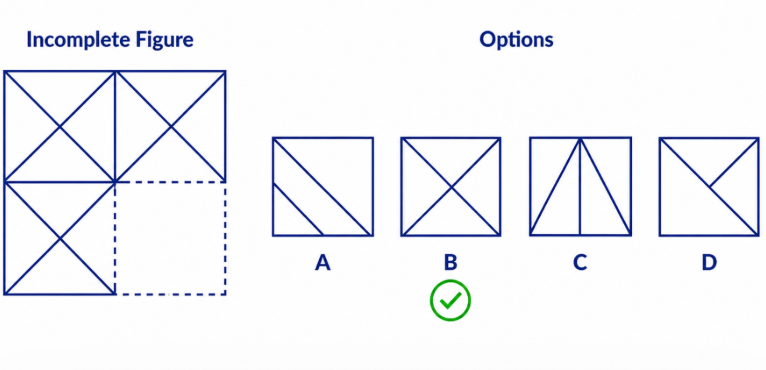
Basic Concept:
Think of it like completing a jigsaw puzzle. The main figure has a missing piece and you have to find exactly which piece fits perfectly - matching the pattern, lines and design of the rest of the figure.
Types of Figure Completion Questions in SSC CGL:
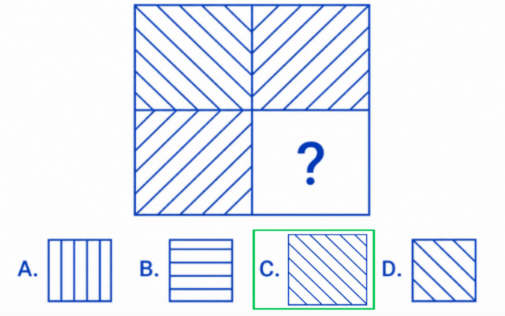
Type 1 - Symmetric Figure Completion The figure is symmetric and the missing part should mirror the other parts.
Example:
A square figure is divided into 4 equal parts. Three parts show a diagonal line pattern. The fourth part is missing. The correct option will have the same diagonal line pattern matching the rest of the figure.
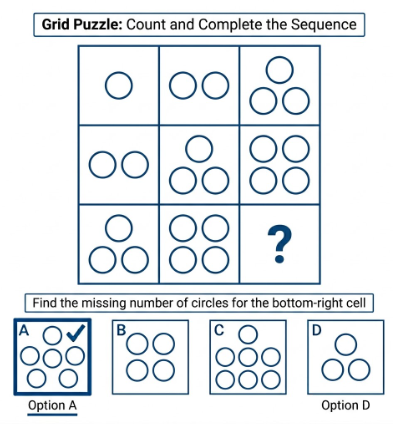
Type 2 - Pattern Based Completion The figure has a repeating pattern and the missing part should continue that pattern.
Example:
A grid figure where each row has circles increasing in number. The missing cell should have the correct number of circles following the pattern.
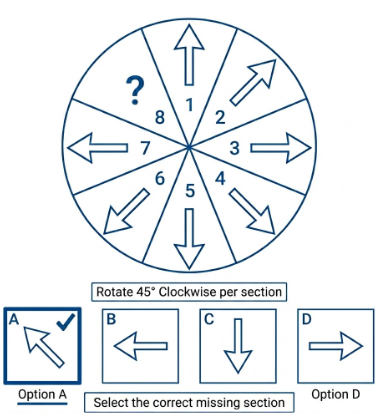
Type 3 - Rotational Completion The figure has a rotational pattern and the missing part should fit the rotation.
Example:
A circular figure divided into sections where each section has an arrow rotated by 45°. The missing section should have the arrow at the correct rotation.
How to Solve Figure Completion Questions:
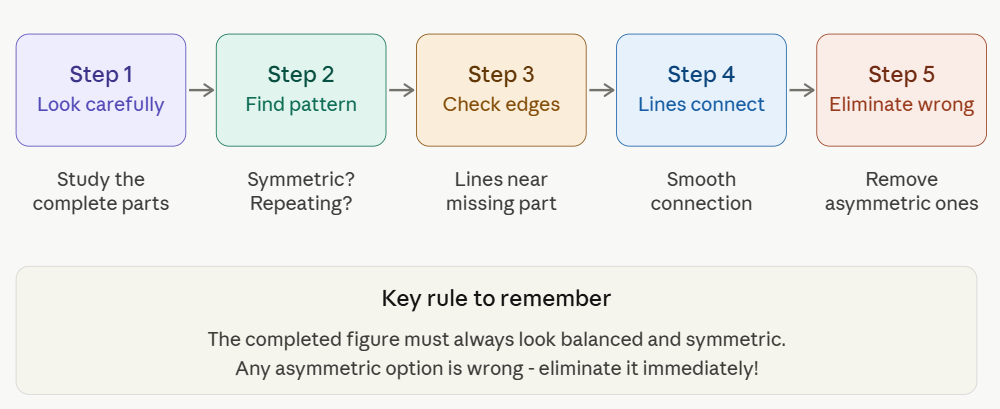
Step 1 - Look at the complete parts of the figure carefully.
Step 2 - Identify the pattern - is it symmetric, repeating or rotational?
Step 3 - Check what lines, shapes or patterns are near the missing part.
Step 4 - The missing part must connect smoothly with the existing lines.
Step 5 - Eliminate options that are asymmetric or break the pattern.
Important Rules:
Rule 1 - The missing part must continue the same pattern as the rest of the figure.
Rule 2 - The lines at the edges of the missing part must connect smoothly with the lines of the existing figure.
Rule 3 - The overall completed figure must look balanced and symmetric.
Rule 4 - The missing part must be exactly the same size as the empty space.
Rule 5 - No extra lines should appear in the completed figure that break the pattern.
Quick Tricks:
Trick 1 - Check the boundary lines first. The lines at the edges of the missing part must exactly match the lines of the existing figure at those edges.
Trick 2 - If the figure is symmetric, the missing part is a mirror image of the opposite part.
Trick 3 - Eliminate options that have extra lines or missing lines compared to what is needed.
Trick 4 - If you find two options that seem correct - check which one makes the overall figure more balanced.
Trick 5 - Rotate the options mentally to check if they fit in a different orientation.
Common Mistakes to Avoid:
Mistake 1 - Choosing an option that looks similar but has slightly different lines or angles. The match must be exact.
Mistake 2 - Not checking the boundary edges carefully. A wrong option may look correct in the center but its edges do not match.
Mistake 3 - Ignoring the overall balance of the figure. The completed figure must look complete and balanced - not lopsided.
Important Tips:
- Always check edge lines first - they are the most reliable clue
- Practice with simple symmetric figures first then move to complex ones
- In exam eliminate at least 2 options quickly using the edge line rule
- 1 to 2 questions come from this topic in SSC CGL every year
- Practice at least 10 figure completion questions daily