Union Cabinet Approves Rs 37,500 Crore Scheme for Promotion of Surface Coal and Lignite Gasification Projects
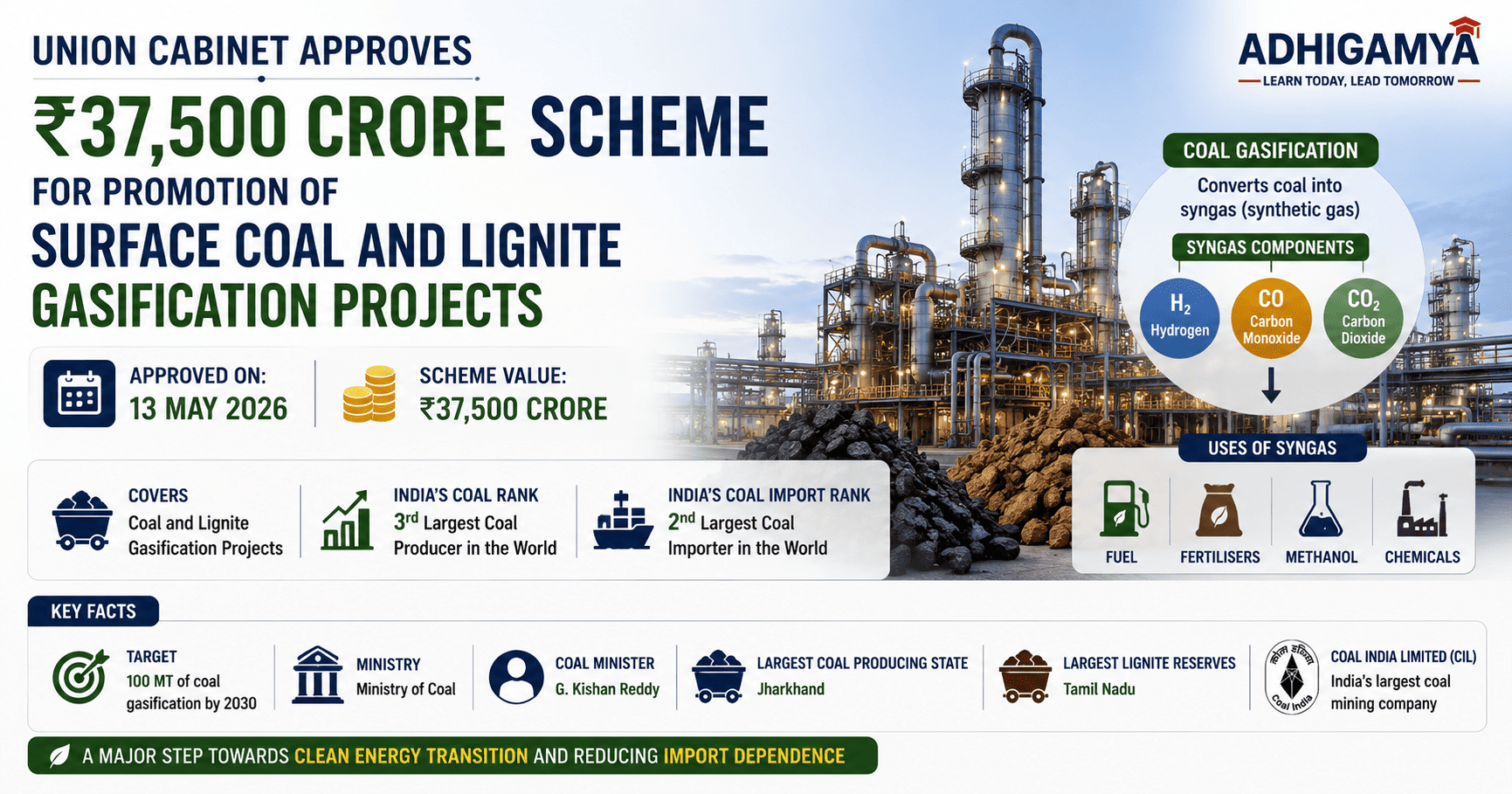
The Union Cabinet approved a Rs 37,500 crore Scheme for Promotion of Surface Coal and Lignite Gasification Projects on 13 May 2026. The scheme covers coal and lignite gasification projects.
Background: Coal gasification is a process that converts coal into synthetic gas (syngas) - a mixture of hydrogen, carbon monoxide and carbon dioxide. This syngas can be used as a clean fuel or as a raw material for producing chemicals, fertilisers, methanol and other products. India is the world's second largest coal importer and third largest producer. Coal gasification reduces dependence on imported natural gas and crude oil while also reducing carbon emissions compared to direct coal burning.
Why in News: The Union Cabinet has approved a massive Rs 37,500 crore scheme to promote surface coal and lignite gasification projects in India - a major step towards clean energy transition and reducing import dependence.
Key Points to Remember:
- Scheme: Scheme for Promotion of Surface Coal and Lignite Gasification Projects
- Approved by: Union Cabinet
- Approval date: 13 May 2026
- Scheme value: Rs 37,500 crore
- Covers: Coal and Lignite Gasification projects
- Coal Gasification: Converts coal into syngas (synthetic gas)
- Syngas components: Hydrogen, Carbon Monoxide, Carbon Dioxide
- Uses of syngas: Fuel, fertilisers, methanol, chemicals
- India's coal rank: 3rd largest coal producer in the world
- India's coal import rank: 2nd largest coal importer
- Relevant Ministry: Ministry of Coal
- Coal Minister: G. Kishan Reddy
- India's coal gasification target: 100 MT of coal gasification by 2030
Related Static GK:
- Lignite: Also called Brown Coal - lower quality than bituminous coal
- India's largest coal producing state: Jharkhand
- India's largest lignite reserves: Tamil Nadu
- Coal India Limited (CIL): India's largest coal mining company - under Ministry of Coal
- India's National Coal Gasification Mission: Target to gasify 100 MT of coal by 2030
- Clean energy alternatives: Solar, Wind, Hydro, Nuclear